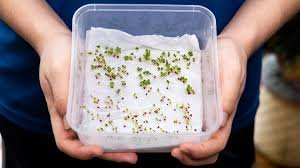
Stratification is the process of exposing seeds to cold, moist conditions that mimic winter. This helps break dormancy, allowing the seeds to sprout when temperatures rise in spring. Without this process, many native seeds would not germinate properly because they have evolved to wait for the right seasonal cues before growing.
Why Do We Do It?
In nature, seeds fall to the ground in autumn, endure the cold months, and then germinate in spring when conditions are ideal. By stratifying seeds ourselves, we replicate this natural cycle, ensuring that seeds are primed and ready to grow at the right time. This is especially important if you’re growing native plants from seed to support biodiversity and create a resilient, eco-friendly landscape.
How to Stratify Seeds
There are different ways to stratify seeds, depending on the species. Some common methods include:
- Refrigeration Method – Place seeds in a damp paper towel, sand, or peat moss inside a sealed plastic bag and store them in the fridge for several weeks.
- Outdoor Winter Sowing – Plant seeds in containers or directly into garden beds during winter so they naturally experience cold and moisture.
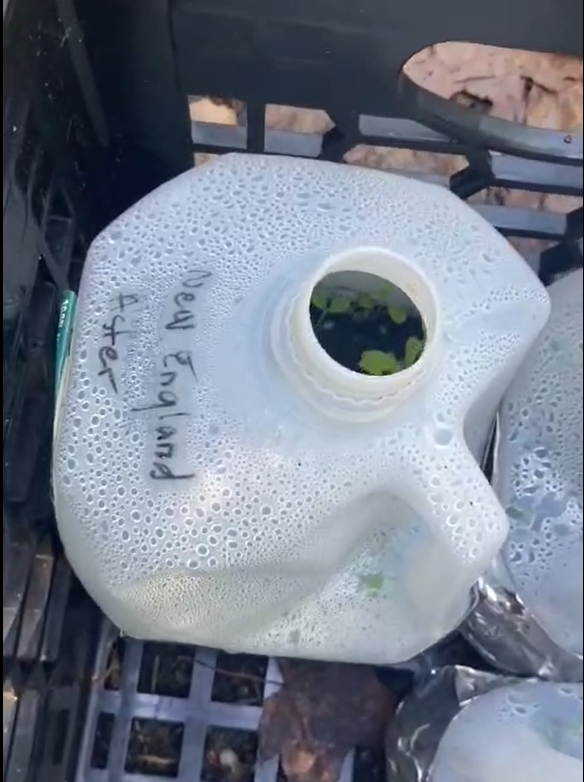
A popular DIY approach is using recycled milk jugs as miniature greenhouses. Simply cut a milk jug in half, fill it with soil, plant your seeds, water them, and place the jug outside. The plastic acts as insulation, keeping moisture in while allowing sunlight and temperature fluctuations to trigger germination when the time is right.
Why Is This an Effective Method?
Stratification ensures that seeds germinate when conditions are optimal, reducing the risk of early sprouting and loss due to unexpected frosts. By giving seeds a head start, you improve their chances of developing strong root systems, making them more resilient once transplanted into your garden.
The Environmental Benefits
By growing native plants through stratification, you’re not only increasing plant diversity but also supporting pollinators, improving soil health, and reducing the need for synthetic fertilizers and pesticides. Plus, repurposing milk jugs for winter sowing helps cut down on plastic waste!
Now is the perfect time to start stratifying your native seeds so they’re ready to grow when spring arrives. Have you tried winter sowing before? Check our socials for more inspiration and let me know what you’re planting this season!
Follow us on our socials: Instagram, Facebook , for daily updates.
Warmly,
Agatha & The More Than Gardens Team